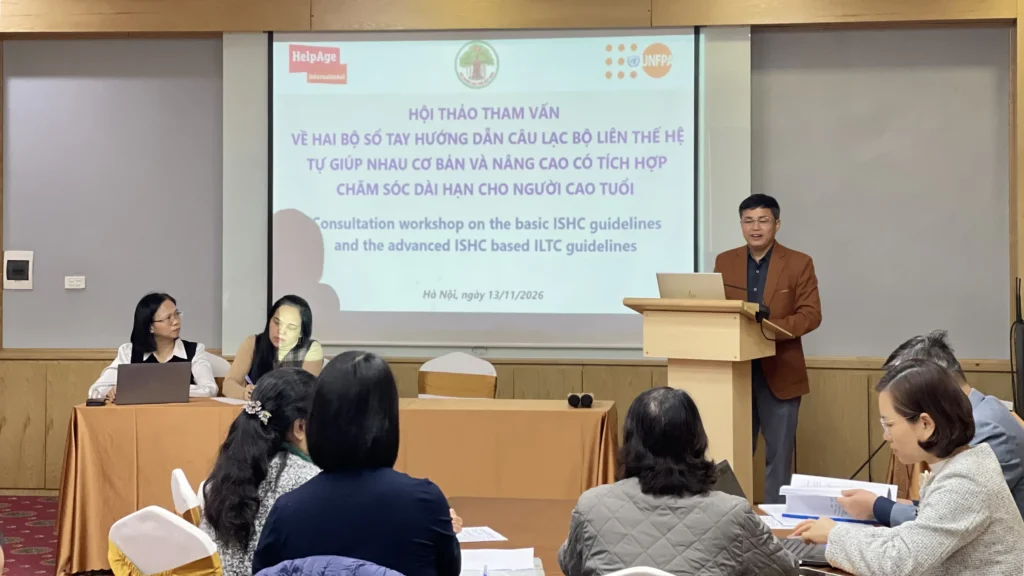
On November 13, 2026, HelpAge International in Vietnam (HAIV) and the United Nations Population Fund (UNFPA), in collaboration with the Vietnam Association of the Elderly (VAE), successfully organised a stakeholder consultation workshop. The event focused on gathering feedback for two series of Operational Manuals for Intergenerational Self-Help Clubs (ISHCs) at both basic and advanced levels, aiming to standardise tools for nationwide replication.
Translating National Goals into Action
Held in Hanoi, the workshop was part of the 2026 cooperation plan between HAIV and UNFPA to support the Ministry of Health and VAE. This activity serves as a cornerstone in implementing the Prime Minister’s Decision 1648/QĐ-TTg on the project to scale up the ISHC model by 2035.
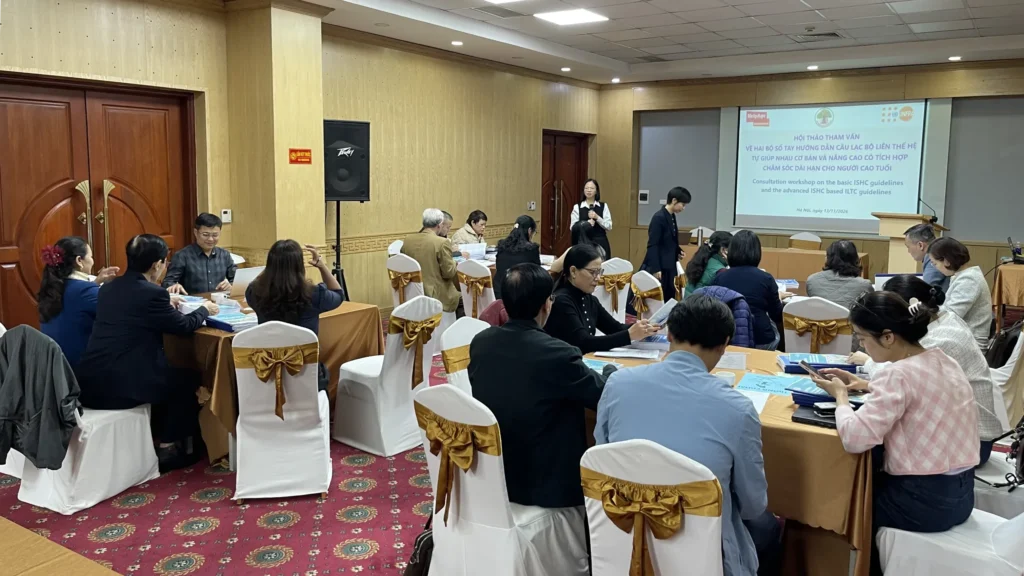
The event brought together 27 delegates representing a diverse range of voices, from policymakers to grassroots practitioners. Participants included representatives from UNFPA, HAIV, VAE, the Department of Social Assistance, and the Department of Population (under the Ministry of Health). Notably, the workshop welcomed representatives from local Associations of the Elderly and ISHC Management Board members from Hanoi, Phu Tho, and Ninh Binh.
Grassroots Insights for Practical Guidelines
Throughout the intensive one-day agenda, the workshop focused on presenting and gathering in-depth feedback on two series of documents. The first is the Basic ISHC Operational Manuals, which includes a Club Quality Assessment Framework. The second is the Advanced Manuals, highlighting the integration of community-based long-term care systems for older people.
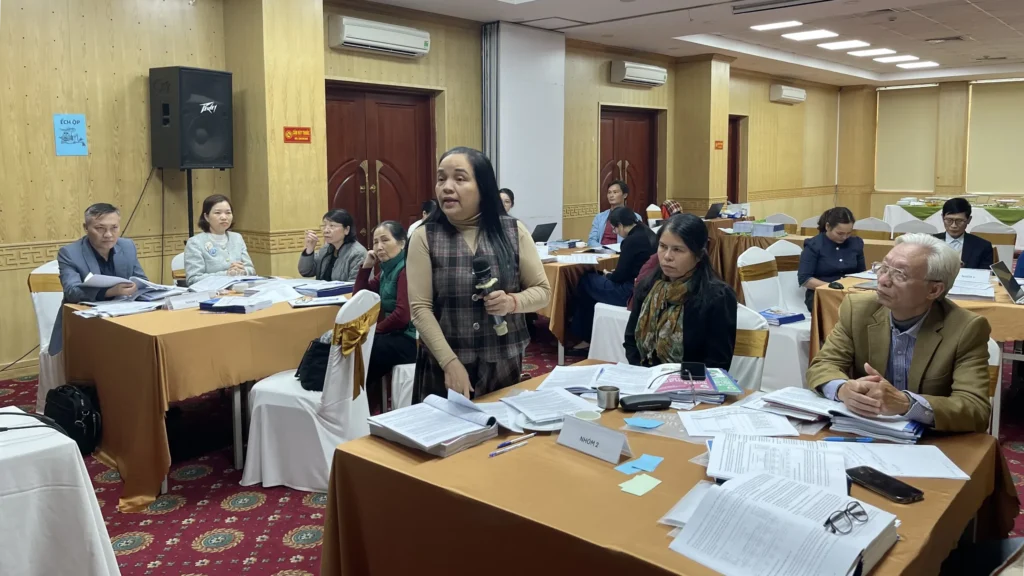
Facilitated by HAIV and VAE, the discussion sessions were highly interactive. Delegates participated enthusiastically, offering practical recommendations and constructive feedback. Insights drawn from actual club operations at the local level helped the drafting committee identify areas for refinement, ensuring the guidelines are feasible, culturally appropriate, and adaptable to different regions.
The valuable feedback collected from this workshop will serve as a vital basis for HAIV, UNFPA, and partners to review, revise, and finalise the two series of manuals. Once officially published, these documents will act as strategic tools, providing a robust technical framework for localities to establish, operate, and sustain ISHCs. Ultimately, this will enhance the quality of care and protect the rights of older people across the country.

